
Members-Only Fact Sheet
Solar & Storage Permit Fee Caps
April 10, 2026
California state law, under California Government Code 66015, sets permitting fee caps for solar energy systems that apply to all cities and counties. These caps, originally enacted by SB 1222 (Leno) in 2012 have been extended twice – first by AB 1414 (Friedman) in 2017 and again by AB 1132 (Friedman) in 2023. The current caps are effective until January 1, 2034.
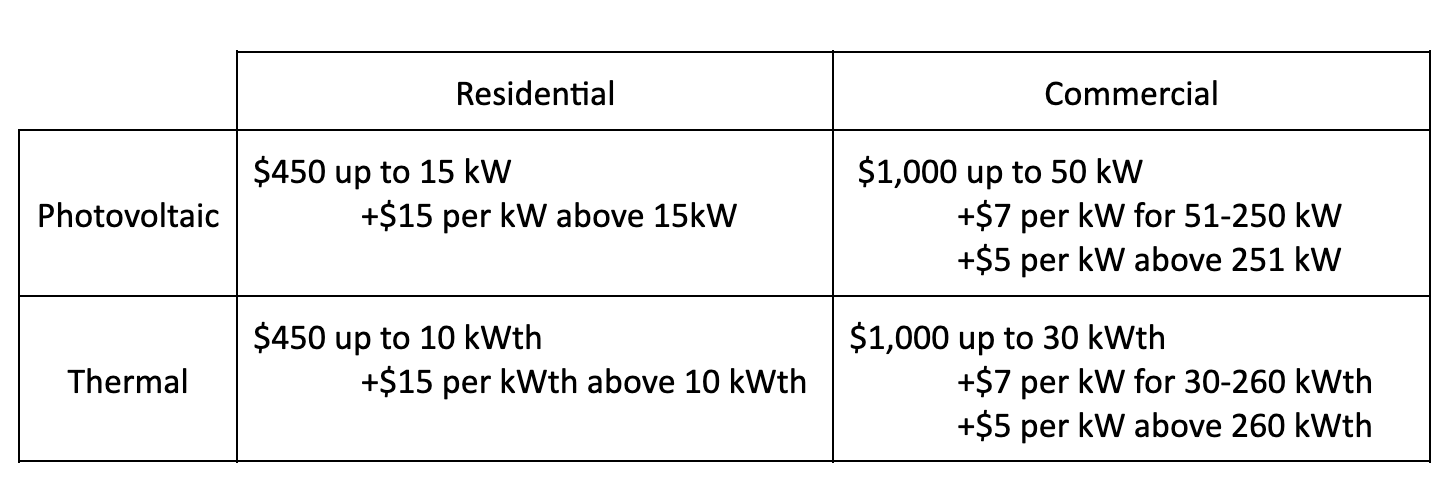
The Fee Cap Applies to the Total Charges
The fee cap applies to the sum of all charges imposed in connection with an application for a solar energy system. This means a city or county may not charge separate fees (e.g., $450 for plan review, $450 for permit issuance, $450 for inspection, etc.) that collectively exceed the statutory limit. All fees related to the application must be added together, and the total may not exceed the cap.
Systems Covered by the Fee Cap
Solar energy system is defined by California Civil Code 801.5(a)(1) as:
“Any solar collector or other solar energy device whose primary purpose is to provide for the collection, storage, and distribution of solar energy for space heating, space cooling, electric generation, or water heating.”
This means that the cap applies to solar and solar + storage systems, including:
Solar thermal systems
Solar photovoltaic systems
Solar systems paired with battery storage
New battery storage added to an existing solar system
The cap does not apply to standalone battery energy storage systems that are not connected to solar.
Electrical Components are Included
“Distribution” means that electrical sub-panels and backup loads panels required as part of the solar energy system are included within the fee cap.
A city or county may not impose separate or additional fees for electrical components when their primary purpose is the distribution of solar energy as part of the solar energy system.
Structural and Integrated Solar Features Are Included
California Civil Code 801.5 § 801.5(a)(2) further includes structural and integrated design features, including:
Solar racking, mounting, and elevated solar support structures
Solar carports
Solar shade structures
Solar awnings, canopies, and patio covers
Solar ground-mounted systems
Building-integrated photovoltaic technology (e.g., photovoltaic windows, siding, roofing shingles, or tiles)
Because these features fall within the statutory definition of a solar energy system, they are subject to the same fee cap.
Exceptions
A city or county can only exceed these caps if it passed a resolution or ordinance and presented “substantial evidence of the reasonable cost to issue the permit.” The ordinance must show that the city or county has adopted streamlined permitting processes, and describe how the higher fee would result in a quick and streamlined approval process. Absent compliance with these requirements, total permit fees imposed in connection with the application may not exceed the cap.
Additionally, because the fee cap applies specifically to cities and counties, independent fire districts are not subject to the cap. However, fire departments operating within a city or county are subject to the same limitation. The combined total of building and fire department fees charged in connection with the application may not exceed the statutory cap.
Member Support
CALSSA members needing assistance with permit fees may submit the following information to permitting@calssa.org for review:
A copy of the receipt, including the permit number and itemized breakdown of fees
The project scope of work and/or permit plans; and
Any correspondence already exchanged with the Authority Having Jurisdiction (AHJ).